The Rich History of Gambling in America: From Origins to Today
history of gambling in America

The Rich History of Gambling in America: From Origins to Today

Uncover the fascinating journey of America's complex relationship with chance, from its earliest forms to its current status.

Discover the Past

Key Takeaways

  • ✓ Gambling in America dates back to pre-colonial Native American traditions.
  • ✓ Lotteries played a crucial role in funding early American infrastructure and institutions.
  • ✓ The 19th century saw a rise and fall of gambling, often linked to westward expansion.
  • ✓ Nevada legalized casino gambling in 1931, setting a precedent for modern gaming.
  • ✓ The internet revolutionized gambling, leading to new legal and regulatory challenges in the 21st century.

How It Works

1
Explore Colonial Roots

Delve into how early American settlers and Native American tribes engaged in various forms of wagering. Understand the initial societal acceptance and the role of lotteries in public financing.

2
Trace 19th Century Shifts

Witness the boom and bust cycles of gambling during the frontier era and the subsequent moral crusades that led to widespread prohibition. Learn about the rise of illegal operations.

3
Understand 20th Century Legalization

Examine Nevada's pivotal decision to legalize gambling and the subsequent growth of Las Vegas. Explore how other states gradually followed suit, leading to the modern casino industry.

4
Analyze Modern & Digital Eras

Investigate the impact of tribal gaming, state-sponsored lotteries, and the explosive growth of online gambling. Consider the ongoing challenges of regulation and responsible gaming.

Early American Wagers: From Indigenous Games to Colonial Lotteries

Detailed close-up of a EuroJackpot lottery ticket with selected numbers in focus. Photo: Waldemar Brandt / Pexels
The history of gambling in America is as old as the continent itself, predating European settlement by centuries. Native American tribes engaged in various forms of wagering, from intricate stick games and dice games to competitive athletic contests where stakes could include valuable possessions or even personal freedom. These games were often intertwined with religious ceremonies, social gatherings, and even conflict resolution, demonstrating a deep cultural integration of chance and skill. When European colonists arrived, they brought their own traditions of gambling, which quickly merged with and sometimes supplanted indigenous practices. English, Dutch, and French settlers were avid card players, dice rollers, and participants in various forms of betting. However, it was the lottery that truly took root and became a cornerstone of early American development. Colonial lotteries were not seen as mere entertainment but as vital instruments for public finance. They were sanctioned and promoted by some of the most esteemed figures in American history, including George Washington, Thomas Jefferson, and Benjamin Franklin. Funds raised from these lotteries were instrumental in building some of the nation's earliest and most significant institutions. Harvard, Yale, and Princeton Universities, for instance, all benefited from lottery proceeds to construct buildings and expand their endowments. Roads, bridges, canals, and even military fortifications were financed through these popular public wagers. This widespread acceptance and utilization of lotteries highlight a pragmatic approach to gambling in the nascent United States, where the potential for public good often outweighed moral objections. As the nation grew, so did the variety and prevalence of gambling activities. Horse racing became a popular spectacle, drawing large crowds and significant wagers, particularly in the Southern states. Taverns and public houses often served as informal gambling dens where card games like Faro and poker were played for high stakes. While some moral reformers began to voice concerns about the potential for vice and ruin, the overall sentiment remained largely tolerant, especially when gambling activities contributed to economic development or public works. This early period established a complex precedent: gambling could be both a source of entertainment and a tool for progress, laying the groundwork for the shifting attitudes that would define its future. The inherent human desire for risk and reward found fertile ground in the expanding American landscape, setting the stage for future debates and transformations in the gambling industry.

The Wild West and the Age of Prohibition: A Tumultuous 19th Century

Close-up of an elderly man arranging poker chips during a game indoors. Photo: MART PRODUCTION / Pexels
The 19th century marked a dramatic and often contradictory period in the history of gambling in America. As the nation expanded westward, so too did the opportunities for and prevalence of gambling. Frontier towns, mining camps, and riverboat communities became hotbeds of activity, where poker, Faro, and other card games were not just pastimes but often the primary form of entertainment and social interaction. Figures like Wild Bill Hickok and Doc Holliday became legendary for their skills at the card table as much as with their firearms. Gambling was an integral part of the rough-and-tumble frontier culture, reflecting the risk-taking spirit of pioneers and prospectors. Riverboats on the Mississippi, in particular, became floating casinos, offering a luxurious and often illicit environment for high-stakes games, attracting both legitimate businessmen and notorious con artists. However, this era of widespread, often unregulated gambling also sowed the seeds of its own decline. The social ills associated with uncontrolled wagering – addiction, financial ruin, crime, and corruption – became increasingly apparent. As communities became more settled and organized, a powerful reform movement began to emerge, fueled by religious revivalism and a growing sense of social responsibility. Temperance movements, which sought to prohibit alcohol, often went hand-in-hand with anti-gambling crusades. States and municipalities, previously tolerant or even complicit, began to enact stricter laws. By the latter half of the 19th century, a wave of prohibition swept across the country. Lotteries, once a respected source of public funding, were largely outlawed due to widespread scandals and accusations of fraud. Most forms of private gambling were also banned, pushing operations underground and into the hands of organized crime. This period effectively demonized gambling, transforming it from a socially acceptable pastime or funding mechanism into a moral vice to be eradicated. While the laws aimed to suppress gambling entirely, they largely succeeded only in making it illicit, creating a black market that would persist for decades. The desire to gamble, however, remained deeply ingrained in American culture, merely waiting for a shift in societal attitudes and legal frameworks to re-emerge. This complex interplay of moral outrage and enduring human inclination for risk would ultimately shape the future trajectory of gambling in the United States, leading to a long period of underground activity and eventual re-evaluation.

Rebirth and Regulation: The 20th Century's Path to Modern Casinos
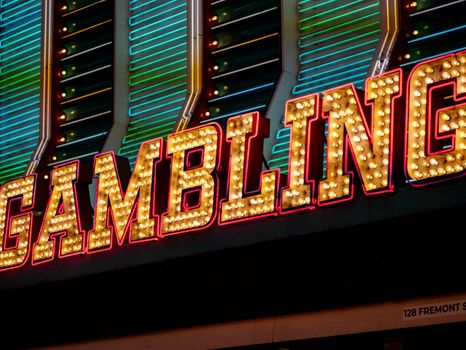
Bright neon sign displaying 'Gambling' with vibrant lights at night in Las Vegas. Photo: Joshua Santos / Pexels
The early 20th century saw gambling largely remain in the shadows, fueled by illegal operations and the rise of organized crime during Prohibition. However, a significant turning point arrived in 1931 when Nevada, grappling with the economic ravages of the Great Depression, made the audacious decision to legalize casino gambling. This move was initially a desperate attempt to boost the state's struggling economy and attract tourists, but it inadvertently laid the foundation for the modern American gambling industry. Las Vegas, a small desert town, began its transformation into the global entertainment capital, built on the promise of legal wagering and elaborate resorts. For decades, Nevada held a near-monopoly on full-scale casino gambling, establishing the regulatory frameworks and operational models that would later be emulated by other states. The mid-to-late 20th century witnessed a gradual re-evaluation of gambling across the nation. State-sponsored lotteries began to reappear in the 1960s, driven by the need for additional revenue streams for public services. New Hampshire launched the first modern state lottery in 1964, marketing it as a 'sweepstakes' to circumvent anti-gambling sentiments. Its success prompted other states to follow suit, leading to the proliferation of lotteries as a socially acceptable form of government-sanctioned gambling. These lotteries often earmark funds for education, infrastructure, or other public welfare programs, further legitimizing their existence in the public eye. Another pivotal development was the Indian Gaming Regulatory Act (IGRA) of 1988. This landmark legislation recognized the right of Native American tribes to operate gambling establishments on their sovereign lands, provided they negotiated compacts with their respective states. IGRA led to an explosion of tribal casinos across the country, creating significant economic opportunities for many Native American communities and fundamentally altering the landscape of American gambling. By the end of the 20th century, casino gambling was no longer confined to Nevada, with Atlantic City in New Jersey emerging as a major East Coast hub, and tribal casinos dotting the map from coast to coast. This period marked a profound shift from a moralistic prohibition to a pragmatic acceptance and regulation of various forms of gambling, driven by economic necessity and the recognition of tribal sovereignty. The industry matured, becoming a significant employer and revenue generator, while also grappling with the ongoing challenge of responsible gambling addiction.

The Digital Age and Future Frontiers: Online Gambling and Sports Betting

Hands arranging poker chips on a colorful casino gaming table, top view. Photo: Pavel Danilyuk / Pexels
The turn of the 21st century ushered in the digital age, bringing with it an unprecedented transformation in the history of gambling in America: the rise of online gambling. The internet's pervasive reach made it possible for individuals to place bets from the comfort of their homes, creating a global, borderless gambling environment. Early online casinos and poker rooms operated largely unregulated, often based in offshore jurisdictions, posing significant challenges for U.S. authorities. The Unlawful Internet Gambling Enforcement Act (UIGEA) of 2006 was a federal attempt to curb online gambling by prohibiting financial institutions from processing transactions for illegal internet gambling sites. While UIGEA significantly impacted the industry, it did not completely halt online wagering, instead pushing it further into a grey area. However, the tide began to turn again in the 2010s. New Jersey led the charge in 2013 by legalizing intrastate online casino and poker games, demonstrating a path for state-level regulation. The most significant shift came with the Supreme Court's 2018 decision to overturn the Professional and Amateur Sports Protection Act (PASPA), which had effectively banned sports betting in most states. This ruling opened the floodgates, allowing individual states to legalize and regulate sports betting. Since then, a rapidly increasing number of states have launched legal sports betting markets, both online and at physical sportsbooks, generating billions in revenue and creating a new, highly visible segment of the gambling industry. This rapid expansion of online gambling and sports betting presents both opportunities and challenges. On one hand, it generates substantial tax revenues for states and offers consumers a convenient, regulated way to engage in wagering. On the other hand, it intensifies concerns about responsible gambling, particularly the potential for increased addiction rates due to the accessibility and constant availability of online platforms. The future of gambling in America will likely involve a continued expansion of regulated online markets, further debates on federal versus state oversight, and an increased focus on player protection and responsible gaming initiatives. The industry is constantly innovating, with new technologies like virtual reality and blockchain potentially shaping its next evolution, ensuring that the complex, ever-evolving story of American gambling is far from over.

Comparison

Era/FeatureColonial Period19th CenturyMid-20th Century21st Century
Primary Gambling FormsLotteries, Card Games, DiceFaro, Poker, Horse RacingCasinos (Nevada), State LotteriesOnline Casinos, Sports Betting, Tribal Gaming
Societal ViewAcceptable (esp. Lotteries)Moral Vice, ProhibitedLimited Acceptance (Nevada), Revenue ToolRegulated, Widely Accepted
Funding Public Works✗ (then back to lotteries)✓ (Lotteries), ✓ (Casino Taxes)✓ (Lotteries, Casino/Sports Betting Taxes)
Regulation LevelMinimal, State-Sanctioned LotteriesWidespread ProhibitionState-Specific (Nevada), Federal (IGRA)State-by-State, Federal Overviews

What Readers Say

"This article provided an incredibly thorough and engaging look into the history of gambling in America. I learned so much about the role of lotteries in colonial times and the complex journey to modern casinos."

Sarah J. · Boston, MA

"As someone in the industry, I appreciated the depth and accuracy of this historical overview. It clearly articulated the pivotal moments, from Nevada's legalization to the impact of tribal gaming."

David M. · Las Vegas, NV

"I always thought gambling was just about casinos, but this article showed me its deep roots in American culture and how it helped build early institutions. A truly eye-opening read!"

Emily R. · Austin, TX

"While comprehensive, I would have loved a bit more detail on the specific types of games played in each era. Still, it's an excellent resource for understanding the historical context and legal shifts."

Michael T. · Chicago, IL

"From indigenous games to the digital age, this article covered it all. It's a fantastic resource for anyone interested in the social and economic evolution of gambling in the United States."

Jessica L. · Seattle, WA

Frequently Asked Questions

What role did lotteries play in the early history of gambling in America?

Lotteries were incredibly significant in early America, serving as a primary means of public finance. Funds raised from lotteries helped build universities like Harvard and Yale, construct roads and bridges, and even support military efforts. They were widely accepted and endorsed by founding fathers, seen as a pragmatic way to fund essential public works before widespread taxation systems were in place.

Was gambling always illegal in most parts of the US?

No, gambling was not always illegal. While certain forms faced moral opposition, lotteries were widely legal and encouraged in colonial times. The 19th century saw a period of widespread prohibition due to social ills, pushing gambling underground. It wasn't until the mid-20th century with Nevada's legalization and later state lotteries and tribal gaming that it began to re-emerge legally across the country.

How did Nevada become the first state to legalize casino gambling?

Nevada legalized casino gambling in 1931 primarily as a desperate measure to boost its economy during the Great Depression. With a small population and limited industries, the state saw legal gambling as a way to attract tourism and generate much-needed tax revenue. This bold move set a precedent and transformed Las Vegas into a global gambling and entertainment hub.

What is the economic impact of gambling in America today?

Today, the gambling industry in America is a massive economic force. It generates billions in tax revenue for states, supports hundreds of thousands of jobs, and contributes significantly to tourism and hospitality sectors. From state lotteries funding education to tribal casinos driving economic development in Native American communities, its economic impact is substantial and widespread.

How does tribal gaming fit into the history of gambling in America?

Tribal gaming became a major force after the Indian Gaming Regulatory Act (IGRA) of 1988. This act recognized the sovereign right of Native American tribes to operate gambling facilities on their lands, provided they negotiated compacts with states. This led to the rapid growth of tribal casinos, which have become vital for economic development, job creation, and funding essential services within tribal communities across the nation.

Who should be aware of the history of gambling in America?

Anyone interested in American social history, economic development, legal evolution, or the gambling industry itself should be aware of its history. It's particularly relevant for policymakers, industry professionals, historians, and individuals seeking to understand the complex relationship between society, morality, and economic opportunity in the U.S.

What are the primary risks associated with the expansion of online gambling?

While offering convenience and revenue, the expansion of online gambling carries risks, primarily concerning responsible gambling. The 24/7 accessibility and ease of play can increase the potential for problem gambling and addiction. Regulators and operators are increasingly focusing on implementing safeguards, self-exclusion programs, and support services to mitigate these risks and promote healthy gaming habits.

What might the future hold for gambling in America?

The future of gambling in America will likely see continued expansion of regulated online sports betting and casino gaming across more states. We can expect ongoing debates around federal vs. state control, increased focus on responsible gaming technologies and policies, and the integration of new tech like virtual reality and blockchain, further evolving how and where Americans place their wagers.

Understanding the history of gambling in America offers invaluable insights into the nation's cultural, economic, and legal evolution. From its colonial origins to the digital age, this journey reflects shifting societal values and economic imperatives. Explore this rich past to better comprehend the present and anticipate the future of American wagering.

Topics: history of gambling in Americagambling evolution USAmerican gambling lawscasino history USAonline gambling history
Leo List
Brampton weed
Adultwork