Mastering Roulette: How to Win at Roulette Every Time
how to win at roulette every time

Mastering Roulette: How to Win at Roulette Every Time

Unravel the complexities of roulette and equip yourself with knowledge and strategies to consistently improve your chances of winning.

Start Winning Now

Key Takeaways

  • ✓ Roulette is a game of chance, but strategies can influence outcomes.
  • ✓ Understanding odds and payouts is crucial for informed betting.
  • ✓ Bankroll management is paramount to sustained play and minimizing losses.
  • ✓ No strategy guarantees a win every single time due to the house edge.

How It Works

1
Understand the Game Mechanics

Before placing any bets, familiarize yourself with the roulette wheel (European vs. American) and the various betting options available. Knowing the layout is fundamental.

2
Learn Different Betting Strategies

Explore popular strategies like Martingale, Fibonacci, or D'Alembert. Understand their principles, risk levels, and how they apply to different bet types.

3
Practice Bankroll Management

Set strict limits on your spending and stick to them. Never chase losses and know when to walk away to protect your finances and enjoy the game responsibly.

4
Play Responsibly and Safely

Remember that roulette is entertainment. Embrace the thrill of the game while maintaining a balanced perspective and prioritizing responsible gambling habits.

Understanding the Fundamentals of Roulette and Its Odds
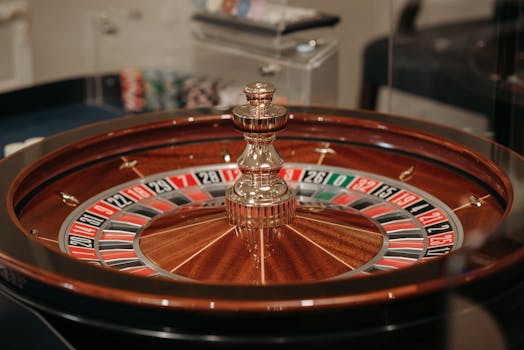
Close-up of a classic roulette wheel in a casino setting showcasing the elegant wooden design. Photo: Pavel Danilyuk / Pexels
To truly grasp the concept of 'how to win at roulette every time,' one must first confront the fundamental nature of the game itself. Roulette, at its core, is a game of chance, governed by the spin of a wheel and the bounce of a ball. Unlike card games where skill can demonstrably alter outcomes, roulette's individual spins are independent events, meaning past results do not influence future ones. This is a crucial distinction that often trips up novice players. The wheel typically features numbers from 1 to 36, colored red or black, plus one or two green zero pockets (0 and 00). The presence of these green zero pockets is where the casino derives its inherent advantage, known as the 'house edge.' In European Roulette, there's a single zero (0), resulting in a house edge of approximately 2.7%. This means for every $100 wagered, on average, the casino expects to keep $2.70. American Roulette, with both a single (0) and a double zero (00), increases the house edge significantly to about 5.26%. This difference, while seemingly small, has a profound impact on a player's long-term profitability. Therefore, a primary, immediate strategy for anyone looking to optimize their chances is to always favor European Roulette tables if available. The odds are simply better. Beyond the house edge, understanding specific bet odds is paramount. Bets are generally categorized into 'inside' and 'outside' bets. Inside bets, such as betting on a single number (straight up), offer high payouts (35:1) but have very low probabilities of hitting (1 in 37 for European, 1 in 38 for American). Outside bets, like betting on Red/Black, Odd/Even, or High/Low, offer lower payouts (1:1, or 'even money') but higher probabilities (nearly 50%, offset by the zero). Column and Dozen bets pay 2:1. A common misconception is that certain numbers are 'due' to hit because they haven't appeared in a while. This is known as the Gambler's Fallacy and is a dangerous trap for those attempting to 'beat' roulette. Each spin is a fresh start, independent of what came before. True mastery involves acknowledging these statistical realities and building a strategy around them, rather than against them. For more insights on responsible gaming, explore this resource: Understanding Responsible Gambling. Understanding these foundational odds and the house edge is the first, most critical step in approaching roulette with a realistic and strategic mindset. Without this understanding, any attempt to consistently win is built on a shaky foundation of false hope rather than statistical reality.

Exploring Popular Roulette Betting Strategies and Systems
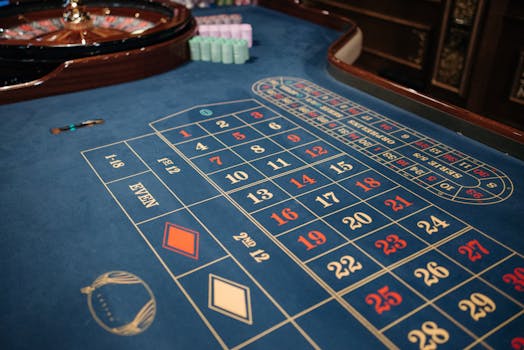
Luxurious casino setting with a roulette table ready for high-stakes gaming sessions. Photo: Pavel Danilyuk / Pexels
While no system can definitively guarantee 'how to win at roulette every time' due to the immutable house edge, various betting strategies aim to optimize play, manage risk, and potentially yield short-term gains. It's crucial to approach these strategies not as foolproof methods to defy statistics, but as frameworks for structured betting. The most widely known is the Martingale system, often the first strategy new players encounter. It involves doubling your bet after every loss, with the idea that when you eventually win, you will recover all previous losses plus a profit equal to your initial bet. This system is typically applied to even-money bets (Red/Black, Odd/Even, High/Low). While mathematically sound in theory, its practical application is fraught with danger. A string of consecutive losses can quickly lead to bets exceeding table limits or depleting one's bankroll entirely. Imagine starting with a $5 bet; after 8 consecutive losses, your next bet would need to be $1,280 – a rapid escalation. Another popular strategy is the Fibonacci system, which also involves increasing bets after a loss, but at a slower, less aggressive rate than Martingale. It follows the Fibonacci sequence (1, 1, 2, 3, 5, 8, 13, etc.), where each number is the sum of the two preceding ones. When you win, you move back two steps in the sequence. This system is generally considered less risky than Martingale, but still susceptible to long losing streaks. The D'Alembert system is even more conservative, increasing your bet by one unit after a loss and decreasing it by one unit after a win. It's designed for players with a smaller bankroll and aims for a more gradual, less volatile progression. Beyond these progressive systems, there are also non-progressive strategies. The 'inside' betting strategies, while offering higher payouts, are inherently riskier due to lower probabilities. Some players attempt to cover a significant portion of the wheel with multiple inside bets, hoping to hit one of their chosen numbers. For example, betting on multiple 'splits' (two adjacent numbers) or 'corners' (four adjacent numbers). While this increases the chances of hitting a number, it also significantly increases the total amount wagered per spin, meaning a loss can be more substantial. It's vital to remember that all these strategies operate within the confines of the house edge. They might alter the short-term variance of your results, but they cannot eliminate the long-term mathematical advantage of the casino. Understanding the limitations and risks associated with each strategy is as important as understanding their mechanics. No system can guarantee a win every time, but a well-understood strategy can help manage expectations and structure your play.

Mastering Bankroll Management and Psychological Discipline

The true, actionable secret to approaching 'how to win at roulette every time' — or more accurately, how to minimize losses and maximize enjoyment — lies not in complex betting systems, but in impeccable bankroll management and unwavering psychological discipline. Without these two pillars, even the most statistically aware player is destined for frustration. Bankroll management begins before you even sit at the table. It involves setting a strict budget for your gambling session, an amount you are entirely prepared to lose. This isn't money you need for rent, groceries, or bills; it's disposable income allocated for entertainment. Once this budget is set, it becomes an inviolable limit. Never, under any circumstances, exceed it. This single rule is more powerful than any betting strategy ever devised. Furthermore, it's wise to establish a 'stop-loss' limit within your session budget. For example, if your total bankroll for the night is $500, you might decide that if you lose $200, you will walk away, regardless of how much time has passed or how 'close' you feel to a win. Conversely, setting a 'win goal' can be equally beneficial. If you start with $500 and decide that if your winnings reach $250 (bringing your total to $750), you will cash out, you secure your profit. The biggest mistake players make is letting their emotions dictate their play – chasing losses or getting greedy after a significant win. The psychological aspect is often overlooked but is arguably the most critical component of responsible gambling. Psychological discipline extends to understanding the difference between short-term luck and long-term probability. A hot streak is just that – a streak – and not an indicator of a change in the game's underlying odds. Similarly, a cold streak doesn't mean you're 'due' for a win. Recognizing these cognitive biases, like the Gambler's Fallacy, is vital. Take breaks, stay hydrated, and avoid playing when you're tired, stressed, or under the influence of alcohol, as these states impair judgment. Treat roulette as a form of entertainment, not an income source. The thrill comes from the possibility, not the certainty. By diligently managing your bankroll and cultivating strong psychological resilience, you transform your approach from a desperate attempt to 'beat the house' into a controlled, enjoyable, and sustainable form of recreation. This responsible approach is the closest you'll get to consistently 'winning' in the broader sense of maintaining financial health and enjoying the game. For additional tips on safe betting practices, check out this guide: Responsible Betting Practices. These practices ensure longevity in your gaming hobby and protect your overall well-being.

Advanced Tips and Common Pitfalls to Avoid in Roulette

Beyond understanding the basics and implementing solid bankroll management, there are advanced considerations and common pitfalls that players serious about improving their roulette experience should be aware of. While the dream of 'how to win at roulette every time' remains elusive due to the house edge, these insights can significantly refine your approach. **Advanced Tips for Strategic Play:** * **Prioritize European Roulette:** As mentioned, the single zero in European roulette (2.7% house edge) is always preferable to American roulette's double zero (5.26% house edge). This is the single most impactful choice you can make before placing a bet. * **Look for 'En Prison' or 'La Partage' Rules:** Some European tables offer these favorable rules, typically for even-money bets. 'La Partage' means if the ball lands on zero, you lose only half your even-money bet. 'En Prison' allows your even-money bet to be 'imprisoned' for the next spin; if it wins, you get your original bet back. Both rules effectively halve the house edge on even-money bets to about 1.35%, making them the best odds in the casino. * **Practice with Free Games:** Before wagering real money, especially when trying out a new strategy, utilize free online roulette games. This allows you to understand the mechanics and test your chosen system without financial risk. * **Observe the Table:** Some players like to observe a table for several spins before joining, looking for any 'patterns' – though remember, each spin is independent. While this doesn't change the odds, it can sometimes help a player feel more comfortable with the flow of the game. **Common Pitfalls to Avoid:** * **The Gambler's Fallacy:** This is the most dangerous pitfall. Believing that a number is 'due' because it hasn't appeared in a while, or that a color must appear after a long streak of the opposite color, is statistically incorrect. Each spin is independent. * **Chasing Losses:** This is a direct violation of good bankroll management. Trying to recoup money you've lost by placing larger or riskier bets almost always leads to further, more significant losses. * **Ignoring Table Limits:** Progressive betting systems can quickly hit table maximums, rendering the system ineffective and leaving you with substantial losses that cannot be recovered by the system's logic. * **Playing Under Influence:** Alcohol or other substances impair judgment and can lead to reckless betting decisions. Always play with a clear mind. * **Believing in 'Hot' or 'Cold' Numbers:** While some numbers may appear more frequently in a short session, over the long run, the probabilities balance out. There's no scientific basis for 'hot' or 'cold' numbers in a properly functioning roulette wheel. * **Over-reliance on Systems:** Remember, no betting system can overcome the house edge. Systems are tools for managing bets, not guarantees of profit. Understanding their limitations is key to avoiding disappointment and significant losses. By incorporating these advanced tips and diligently avoiding common pitfalls, players can approach roulette with a more informed, disciplined, and ultimately, more enjoyable perspective. The goal shifts from an impossible 'win every time' to a more realistic and sustainable approach of responsible entertainment and calculated risk.

Comparison

FeatureEuropean RouletteAmerican RouletteFrench Roulette (La Partage/En Prison)
Number of Zeros1 (0)2 (0, 00)1 (0)
House Edge (Even Money)2.70%5.26%1.35%
PayoutsStandardStandardStandard
Player AdvantageHigherLowerHighest

What Readers Say

"This guide completely changed my perspective on roulette. I used to chase losses, but now with better bankroll management, I actually enjoy my casino visits more and walk away feeling in control, even when I don't win big."

Sarah J. · Las Vegas, NV

"Learning about the house edge difference between European and American roulette was a game-changer. I always seek out European tables now, and while I don't win every time, my sessions are definitely more prolonged and enjoyable."

Mark D. · Atlantic City, NJ

"Following the advice on setting a win goal and sticking to it has helped me secure profits multiple times. Just last week, I walked away up $150, something I rarely did before reading this article!"

Emily R. · Reno, NV

"The article is very realistic about the 'every time' aspect, which I appreciate. It doesn't promise miracles but provides actionable strategies for smarter play. The psychological discipline section resonated deeply."

David L. · Online Player

"I used to think the Martingale system was a guaranteed win. This guide clarified its risks and introduced me to less aggressive strategies, making my roulette experience much less stressful and more fun."

Jessica M. · Miami, FL

Frequently Asked Questions

Is it truly possible to win at roulette every time?

No, it is not truly possible to win at roulette every time due to the inherent house edge built into the game. Roulette is a game of chance, and while strategies can help manage risk and potentially yield short-term gains, the casino always has a statistical advantage over the long run. Any claim of a guaranteed win every time is misleading.

Are roulette betting systems like Martingale effective for consistent wins?

Roulette betting systems like Martingale can be effective for short-term gains, but they do not guarantee consistent wins. They are susceptible to long losing streaks that can quickly deplete your bankroll or hit table limits, making it impossible to recover losses. They are tools for managing bets, not for overcoming the house edge.

How can I improve my chances of winning at roulette?

You can improve your chances by always playing European roulette (single zero) over American roulette (double zero), looking for 'La Partage' or 'En Prison' rules, practicing strict bankroll management, setting win and loss limits, and maintaining psychological discipline to avoid chasing losses.

What is the most important factor for long-term success in roulette?

The most important factor for long-term success in roulette, defined as sustained enjoyment and minimizing losses, is disciplined bankroll management combined with a realistic understanding of the game's odds. Knowing when to stop, whether winning or losing, is paramount.

How does European Roulette compare to American Roulette in terms of odds?

European Roulette has a single zero (0), resulting in a house edge of 2.7%. American Roulette has both a single zero (0) and a double zero (00), which increases the house edge to 5.26%. This makes European Roulette significantly more favorable to the player.

Who should avoid playing roulette?

Anyone who cannot afford to lose the money they are betting, those prone to impulsive decisions, individuals with a history of gambling problems, or anyone who views roulette as a reliable source of income rather than entertainment should avoid playing.

Is it safe to play roulette online?

Playing roulette online is safe if you choose reputable, licensed, and regulated online casinos. Ensure the platform uses certified Random Number Generators (RNGs) to ensure fairness and practices responsible gambling. Always check reviews and licensing information before depositing funds.

What are future trends in roulette that might affect gameplay?

Future trends in roulette might include more live dealer online options offering diverse rule sets, enhanced virtual reality (VR) roulette experiences for immersive play, and potentially more personalized responsible gambling tools integrated into platforms to help players manage their habits better.

While truly winning at roulette every time is a myth, you can significantly enhance your experience and manage your outcomes. By applying the strategies, bankroll management, and psychological discipline discussed, you're well on your way to becoming a smarter, more responsible, and ultimately, more successful roulette player. Take control of your game today!

Topics: how to win at roulette every timeroulette strategiesroulette oddsbankroll management rouletteresponsible gambling roulette
Leo List
Brampton weed
Adultwork EstrelaBet Vai de Bet R7 Bet Betão Galera Bet Rainbet Bet9ja Shop SportyBet BetKing Sisal Loto Foot Hollywoodbets YesPlay Odibets RushBet Jugabet BetWarrior BetCity MSport betPawa Fortebet