✓ Social casinos and sweepstakes casinos operate legally due to specific structural differences.
✓ Efforts to legalize online sports betting and casino games have been unsuccessful to date, but continue.
How It Works
1
Understand the Legal Definition
Texas law defines gambling broadly, making most forms of online wagering illegal if real money is involved and there's a chance element. Distinguishing between illegal gambling and legal promotional sweepstakes is key.
2
Identify Permitted Alternatives
While real-money online casinos are out, Texans can legally participate in social casinos or sweepstakes casinos. These platforms offer casino-style games where you can win real cash prizes without direct real-money wagering.
3
Monitor Legislative Changes
The legal landscape is dynamic. Stay informed about ongoing legislative efforts and proposals that could potentially legalize online sports betting or casino gambling in the future. Texas lawmakers frequently debate these issues.
4
Exercise Caution with Offshore Sites
Many offshore online gambling sites accept Texas players, but they operate outside US jurisdiction. Using these sites carries significant risks, including lack of consumer protection and potential legal repercussions, though prosecution of individual players is rare.
The Current State of Texas Gambling Laws: A Comprehensive Overview
Photo: Pavel Danilyuk / Pexels
Texas, known for its fierce independence and unique legal landscape, stands as one of the larger states yet to embrace widespread legalized gambling, particularly when it comes to online platforms. The question, "is online gambling legal in Texas?" is met with a definitive 'no' for most traditional forms. The state's Penal Code Chapter 47, titled 'Gambling,' lays out a strict framework that broadly defines and prohibits various gambling activities. This includes operating a gambling place, promoting gambling, and even participating in gambling as a player under certain conditions. The core of the law targets activities where a person makes a bet on the partial or whole outcome of a game or contest, or on the performance of a participant in a game or contest, or on the result of any randomly determined event or game of chance, with the understanding that they will win something of value in the event of a certain outcome. This broad definition effectively outlaws most forms of online casinos and sports betting as they are commonly understood and operated in other regulated states.
However, it's crucial to understand the nuances. While operating an illegal gambling site from within Texas is a felony, and promoting such a site is also heavily penalized, the prosecution of individual players for simply placing bets online is exceedingly rare. This doesn't mean it's legal, but rather that enforcement priorities typically lie with operators and promoters. The law does make exceptions for certain forms of charitable bingo and raffles, as well as the state lottery, which are explicitly permitted. Parimutuel wagering on horse and greyhound racing is also legal and regulated. These exceptions highlight that Texas isn't entirely anti-gambling, but rather highly selective and cautious about its expansion. The state's conservative political climate and strong religious influence have historically played a significant role in blocking legislative efforts to expand gambling. Understanding this foundational legal structure is the first step in comprehending the limited options available to Texans interested in online wagering. It's a complex picture, often leaving residents confused about what they can and cannot do legally in the digital gambling space. For those seeking to delve deeper into the general legalities surrounding gambling, exploring resources on gambling laws can provide valuable context.
Exploring Legal Alternatives: Social and Sweepstakes Casinos in Texas
Photo: Kaysha / Pexels
Given the strict prohibitions against traditional online gambling in Texas, many residents wonder if there are any legal avenues to enjoy casino-style games online. The answer lies in the innovative models of social and sweepstakes casinos. These platforms have gained significant popularity precisely because they operate within the confines of Texas law, offering a workaround to the state's stringent gambling regulations. Unlike real-money online casinos where you directly wager cash, social and sweepstakes casinos utilize a dual-currency system. Players typically purchase 'Gold Coins' (or similar virtual currency) for entertainment purposes, which have no real-world value and cannot be redeemed for cash. Alongside these Gold Coins, players often receive 'Sweeps Coins' (or equivalent promotional tokens) for free through various methods, such as daily bonuses, mail-in requests, or as a bonus when purchasing Gold Coins. These Sweeps Coins can then be used to play games, and any winnings accumulated from Sweeps Coins can be redeemed for real cash prizes or gift cards.
This model is crucial because it legally distinguishes these platforms from traditional gambling. The key difference is that no direct purchase of Sweeps Coins is required for entry into promotional games where real prizes can be won. This aligns with federal sweepstakes laws and state-level regulations, which typically permit games of chance as long as no 'consideration' (i.e., direct payment) is required to participate in the prize-winning aspect. For Texans, this means they can legally access a wide array of online slots, table games, and even live dealer experiences without violating state law. Popular examples include Chumba Casino, Pulsz Casino, LuckyLand Slots, and Funzpoints, among others. These sites adhere to strict rules to ensure they maintain their legal status, often requiring identity verification to comply with anti-money laundering (AML) regulations and responsible gaming practices. While they may not offer the same high-stakes environment as traditional online casinos, they provide a legitimate and enjoyable alternative for those looking to play casino games online in Texas. Understanding the mechanics of these platforms is essential for safe and legal participation, ensuring that Texans can enjoy their favorite games without legal concern.
The Road Ahead: Legislative Efforts and the Future of Online Gambling in Texas
Photo: Brett A / Pexels
The debate around expanding gambling in Texas is a perennial one, with legislative sessions often seeing various bills introduced to legalize everything from casino resorts to online sports betting. Despite consistent efforts, these proposals have historically faced an uphill battle, often stalling in committees or failing to garner enough support for a floor vote. The most significant push in recent years has been towards legalizing sports betting, with powerful lobbying groups and professional sports franchises actively advocating for its passage. Proponents argue that Texas is missing out on billions in potential tax revenue that is currently flowing to neighboring states like Louisiana and New Mexico, or to illegal offshore markets. They also emphasize consumer protection, suggesting that a regulated market would offer safer options for Texans already participating in unregulated online gambling. However, strong opposition from conservative groups, religious organizations, and some lawmakers who fear the societal impacts of expanded gambling has proven to be a formidable barrier.
Bills typically propose a licensing framework for online sportsbooks, often tied to existing brick-and-mortar racetracks or professional sports teams, along with a tax rate on revenues. While online casinos have also been discussed, they generally face even greater resistance than sports betting due to concerns about accessibility and potential problem gambling. The legislative process in Texas is complex, requiring a supermajority in some instances, making it difficult for controversial measures like gambling expansion to pass. Even if a bill passes both chambers, it still faces the hurdle of a potential gubernatorial veto and, for some forms of gambling, a constitutional amendment requiring voter approval. This multi-layered process means that any significant change to Texas's gambling landscape is a long shot, requiring sustained political will and a shift in public opinion. For now, the answer to "is online gambling legal in Texas?" remains largely negative for traditional forms, but the conversation is far from over. Texans interested in the topic should follow legislative sessions closely, as the political winds can shift, potentially paving the way for a more open gambling market in the future. For general information on the broader context of gambling regulations, exploring state-specific laws is always recommended.
Navigating Offshore Sites: Risks and Realities for Texas Players
Photo: MART PRODUCTION / Pexels
Many Texans, seeking to bypass the state's strict gambling laws, turn to offshore online casinos and sportsbooks. These sites operate outside the jurisdiction of US federal and state laws, accepting players from regions where online gambling is not regulated or explicitly prohibited. While they are readily accessible, it's crucial to understand the significant risks associated with using them. The primary concern is the complete lack of consumer protection. If a dispute arises regarding winnings, account closure, or unfair practices, players have no legal recourse. There are no regulatory bodies to appeal to, leaving individuals at the mercy of the offshore operator. This can lead to issues with unfair games, delayed or denied payouts, and even outright fraud.
Furthermore, while individual Texans are rarely prosecuted for placing bets on offshore sites, the act itself technically violates state law. Although the focus of enforcement is typically on operators, the legal ambiguity leaves players in a vulnerable position. Transaction processing can also be problematic; many US banks block transactions to known offshore gambling sites, leading players to use alternative methods like cryptocurrency, which comes with its own set of complexities and risks. Security is another major concern. Offshore sites may not adhere to the same stringent data protection and cybersecurity standards as regulated platforms, potentially exposing personal and financial information to breaches. For these reasons, while the allure of traditional online casino games or sports betting might be strong, the risks associated with offshore sites far outweigh the convenience for Texas residents. It is always advisable to stick to legally sanctioned alternatives like social and sweepstakes casinos to ensure both safety and compliance with state law. Prioritizing legal and regulated options safeguards your funds and personal information.
Comparison
Feature
Regulated US Online Casino (e.g., NJ)
Sweepstakes Casino (Legal in TX)
Offshore Online Casino (Illegal in TX)
Legality in Texas
✗ (Illegal)
✓ (Legal)
✗ (Illegal, but accessible)
Real Money Wagering
✓ (Directly)
✗ (Indirect via Sweeps Coins)
✓ (Directly)
Consumer Protection
✓ (Strong regulatory oversight)
✓ (Promotional laws, self-regulation)
✗ (None)
Payment Security
✓ (Bank transfers, PayPal, etc.)
✓ (Standard payment processors)
✗ (Risky, crypto often needed)
Game Variety
Excellent
Good
Excellent
Responsible Gaming Tools
✓ (Self-exclusion, limits)
✓ (Self-exclusion, limits)
✗ (Limited or non-existent)
What Readers Say
★★★★★
"I was so confused about whether is online gambling legal in Texas. This article clearly explained why traditional casinos are out but introduced me to sweepstakes casinos, which I now enjoy safely. The distinction was really helpful."
Maria P. · Houston, TX
★★★★★
"As a sports fan, I've always wondered about online betting in Texas. This guide confirmed my suspicions about its illegality and gave me a clear picture of the legislative challenges. Very informative and well-researched."
David R. · Dallas, TX
★★★★★
"Thanks to this article, I stopped using an offshore site and switched to a legal sweepstakes casino. The peace of mind knowing I'm playing legally and my winnings are secure is invaluable. Highly recommend reading before you play anywhere."
Sarah K. · Austin, TX
★★★★★
"While I wish traditional online gambling was legal here, this piece provided a realistic look at Texas law. It's disappointing, but the explanation of sweepstakes casinos as a legal alternative was a good silver lining."
Michael T. · San Antonio, TX
★★★★★
"This content is a must-read for any Texan interested in online gaming. It breaks down complex laws into understandable parts and highlights the risks of offshore sites, which I wasn't fully aware of. Excellent resource!"
Jessica L. · El Paso, TX
Frequently Asked Questions
Is online sports betting legal in Texas?
No, online sports betting is currently illegal in Texas. While there have been significant legislative efforts and ongoing debates to legalize it, no bills have successfully passed to establish a regulated market. Texans interested in sports betting must either travel to states where it's legal or use offshore sites, which carry considerable risks.
Can I get into legal trouble for gambling online from Texas?
While the Texas Penal Code prohibits participating in illegal gambling, prosecution of individual players for simply placing bets on offshore sites is extremely rare. Enforcement typically targets operators and promoters of illegal gambling. However, using these sites is still technically a violation and comes with risks like lack of consumer protection and financial security.
How do sweepstakes casinos work, and are they truly legal in Texas?
Sweepstakes casinos operate legally in Texas by utilizing a dual-currency system: 'Gold Coins' for entertainment (no real value) and 'Sweeps Coins' for promotional games that can redeem for cash prizes. The key is that Sweeps Coins are always obtainable for free, meaning no purchase is necessary to participate in the prize-winning opportunities, adhering to US sweepstakes laws.
What are the chances of Texas legalizing online gambling soon?
The chances of Texas legalizing online gambling, particularly traditional casinos, in the immediate future are moderate to low. While sports betting has more momentum, significant political and societal opposition remains. Any change would likely require a constitutional amendment and strong bipartisan support, making it a challenging and drawn-out process.
Are there any legal land-based casinos in Texas?
Texas has very limited land-based gambling. The only federally recognized Native American casino, the Kickapoo Lucky Eagle Casino Hotel, operates on tribal land and is the closest thing to a full-fledged casino. Beyond that, the state lottery, charitable bingo, and parimutuel betting on horse and greyhound racing are the only other legal forms of gambling.
Who should avoid online gambling in Texas?
Anyone looking for a fully regulated, consumer-protected online casino or sportsbook experience should avoid online gambling in Texas due to its illegality. Individuals prone to problem gambling should also exercise extreme caution, as the unregulated nature of offshore sites provides fewer safeguards. Instead, consider legal social or sweepstakes casino options.
What are the financial risks of using offshore gambling sites?
Financial risks include delayed or denied payouts, unfair game practices, and the potential for account closure without cause, all without legal recourse. There's also the risk of credit card companies blocking transactions, forcing the use of less secure or traceable payment methods, and potential exposure to data breaches due to lax security standards.
How does Texas compare to other states regarding online gambling laws?
Texas is among the more restrictive states regarding online gambling. Many other states have legalized online sports betting, and some, like New Jersey, Pennsylvania, and Michigan, have fully regulated online casinos. Texas's slow movement on this issue puts it in stark contrast to the expanding legal gambling landscape across much of the US.
Understanding whether is online gambling legal in Texas is crucial for any resident. By staying informed about state laws and opting for legal, regulated alternatives like sweepstakes casinos, you can enjoy online gaming safely and responsibly within the Lone Star State's legal framework. Make informed choices and prioritize your safety.

 Photo: Pavel Danilyuk / Pexels
 Photo: Kaysha / Pexels
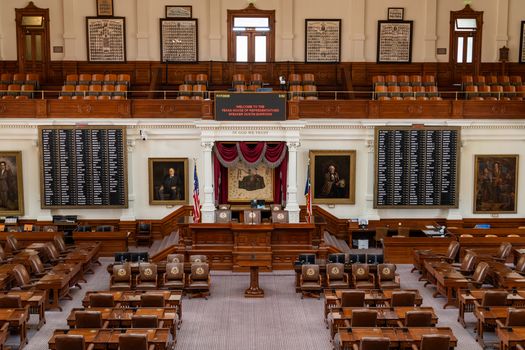 Photo: Brett A / Pexels
 Photo: MART PRODUCTION / Pexels