
Understanding Casino House Edge: Your Ultimate Guide
Unlock the secrets of casino profitability and empower your gaming decisions with this essential knowledge.
Start Learning NowKey Takeaways
- ✓ House edge is the casino's built-in mathematical advantage in any game.
- ✓ It ensures casinos are profitable in the long run, regardless of individual player wins.
- ✓ Different games have varying house edges, impacting your potential returns.
- ✓ Understanding it allows for more informed game selection and strategic play.
How It Works
Casinos establish payout odds that are slightly less than the true mathematical odds of winning. This difference is where the house edge originates.
Every game has a specific set of probabilities for each outcome. The casino uses these probabilities to calculate its long-term advantage.
Over thousands, or even millions, of hands or spins, the house edge guarantees the casino will retain a percentage of all money wagered. This is how they stay in business.
For players, a lower house edge means better odds of retaining your bankroll and potentially winning in the short term. Higher edges deplete funds faster.
The Fundamental Concept of Casino Advantage
 Photo: Pavel Danilyuk / Pexels
Calculating and Interpreting the House Edge in Popular Casino Games
 Photo: Pavel Danilyuk / Pexels
Strategies to Minimize the Impact of House Edge
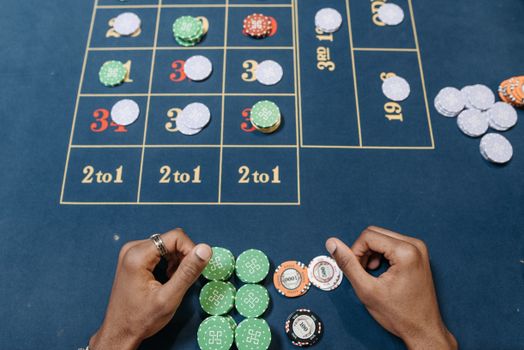 Photo: Pavel Danilyuk / Pexels
Common Misconceptions and Practical Tips for Players
 Photo: Javon Swaby / Pexels
- Educate Yourself on Game Rules: Before playing any game, especially those with strategic elements like blackjack or video poker, thoroughly understand its rules and optimal strategy. A slight variation in rules can significantly alter the house edge.
- Compare House Edges: If playing online, many reputable sites publish RTPs or house edges for their games. If at a land-based casino, do your research beforehand. Always opt for games or bets with the lowest possible house edge.
- Avoid 'Sucker Bets': In games like craps, some proposition bets carry an extremely high house edge. Learn to identify and avoid these. They might offer tempting high payouts, but the odds are heavily stacked against you.
- Play for Fun, Not Profit: While understanding the house edge helps you play smarter, remember that gambling is entertainment. Approach it with the expectation of fun, and any winnings should be considered a bonus. The house edge dictates that, for most players, long-term profit is an unlikely outcome.
- Utilize Free Play and Demos: Many online casinos offer free-play versions of their games. Use these to practice strategies and understand game mechanics without risking real money. This can help you become more comfortable and confident, potentially reducing errors that could increase the effective house edge against you.
- Understand Variance: Recognize that short-term results are random. Don't be discouraged by losses or overconfident by wins. Stick to your strategy and bankroll management regardless of immediate outcomes.
Comparison
| Game | Typical House Edge (Optimal Play) | Strategic Element | Variance (Short-Term) |
|---|---|---|---|
| Blackjack | 0.5% - 1% | High | Medium |
| European Roulette | 2.70% | None | Medium |
| American Roulette | 5.26% | None | Medium |
| Craps (Pass/Don't Pass) | 1.36% - 1.41% | Low | Medium |
| Slots (Average) | 3% - 10% | None | High |
What Readers Say
"This article completely changed my approach to casino games. Understanding casino house edge has made me a much more strategic player, and I feel more in control of my bankroll."
Sarah J. · Las Vegas, NV"I used to just play whatever looked fun. Now, I actively seek out games with lower house edges thanks to this guide. It's incredibly helpful for any serious gambler."
Mark D. · Atlantic City, NJ"After reading this, I tried European Roulette instead of American, and my money lasted significantly longer! The explanation of understanding casino house edge was clear and actionable."
Emily R. · Orlando, FL"While I knew about house edge, this article provided a much deeper dive into specific game calculations and practical tips. Some sections were a bit dense, but overall very valuable."
David L. · Reno, NV"As an online casino player, the advice on comparing RTPs and leveraging bonuses was a game-changer. It helped me select better platforms and maximize my playing time."
Jessica M. · Online PlayerFrequently Asked Questions
What is the casino house edge in simple terms?
The casino house edge is the mathematical advantage the casino has over players in any game, expressed as a percentage. It represents the average amount of money the casino expects to keep from each bet over the long run, ensuring their profitability.
Can I ever truly beat the house edge?
While you can't eliminate the house edge through regular play, you can minimize its impact through optimal strategy, game selection, and bankroll management. Short-term wins are possible due to variance, but the edge always prevails over infinite plays.
How do I find the house edge for a specific game?
For land-based casinos, you might need to research online or ask casino staff (though they might not always provide precise figures). For online casinos, reputable sites often publish the Return to Player (RTP) percentage for their games, from which you can deduce the house edge (100% - RTP = House Edge).
Does a higher bet amount increase the house edge?
No, the house edge is a percentage of your bet, so it remains constant regardless of the bet amount. However, higher bets mean that the absolute monetary value the casino expects to keep is also higher, accelerating potential losses.
Is the house edge the same for all casino games?
Absolutely not. The house edge varies significantly between different games, and even between variations of the same game. Blackjack with optimal strategy typically has one of the lowest edges, while Keno or some slot machines can have much higher edges.
Who should prioritize understanding casino house edge?
Anyone who gambles, whether casually or frequently, should prioritize understanding the house edge. It empowers players to make more informed decisions, manage their bankroll effectively, and approach gambling with realistic expectations, enhancing their overall experience.
Is it safe to gamble if the house always has an edge?
Gambling can be safe if approached responsibly. The house edge is a mathematical reality, but it doesn't mean you can't win in the short term. The key is to view gambling as entertainment, set strict limits, and never bet more than you can afford to lose.
How might future technologies impact the casino house edge?
Future technologies like AI could potentially offer more personalized game experiences or advanced analytics for players. However, the fundamental mathematical principle of the house edge is unlikely to change, as it's integral to the casino's business model. It might influence how games are presented or player engagement, but not the core advantage.
By fully understanding casino house edge, you transform from a passive participant into an informed strategist. Apply these insights to choose your games wisely, manage your bankroll effectively, and enhance your overall casino experience. Play smarter, not harder.