What Are the Odds in Blackjack? Master Your Game!

A vibrant display of casino chips, dice, and playing cards set on a table, embodying chance and excitement.Photo: Pixabay / Pexels

What Are the Odds in Blackjack? Master Your Game!

Unlock the secrets of blackjack probabilities and transform your play from novice to strategic advantage.

Play Smarter Now

Key Takeaways

  • ✓ The typical house edge in blackjack is around 0.5% to 1% with basic strategy.
  • ✓ A natural blackjack (Ace + 10-value card) occurs approximately every 21 hands.
  • ✓ The probability of busting on your next hit depends heavily on your current hand total.
  • ✓ Optimal basic strategy can reduce the house edge to its absolute minimum.
  • ✓ Card counting can give the player a slight edge over the casino.

How It Works

1
Understand Basic Probabilities

Familiarize yourself with the likelihood of various outcomes, like getting a specific card or busting. This forms the foundation of strategic play.

2
Master Basic Strategy

Learn the mathematically proven decisions for every possible hand combination against the dealer's upcard. This is crucial for minimizing the house edge.

3
Recognize Game Rule Variations

Different blackjack rules (e.g., dealer hits/stands on soft 17, payout for blackjack) impact the odds. Choose tables with favorable rules.

4
Practice and Refine

Regular practice, whether online or with a deck of cards, helps solidify your understanding and decision-making speed. Consistency is key to long-term success.

Demystifying Blackjack Probability and House Edge

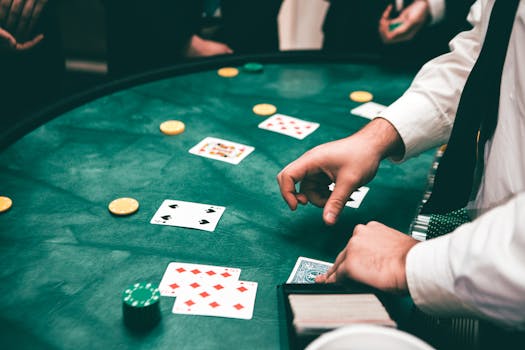
A close-up of poker chips and playing cards on a casino gaming table, highlighting Ace of Diamonds.Photo: Elian Emanuel Coutinho Roehrs / Pexels
Blackjack is often lauded as one of the few casino games where skill genuinely influences the outcome, significantly impacting what are the odds in blackjack. Unlike pure games of chance like roulette or slots, your decisions at the blackjack table can drastically alter the probabilities in your favor, or against them. At its core, understanding blackjack odds begins with grasping the concept of the 'house edge.' The house edge represents the casino's built-in advantage over the player, expressed as a percentage of the player's initial bet. For a typical blackjack game played with optimal basic strategy, this edge can be as low as 0.5% to 1%. This minuscule percentage is why blackjack is so popular among strategic gamblers. Without any strategy, however, making random decisions can skyrocket the house edge to 2% or even higher, turning a potentially favorable game into a losing proposition. The probabilities in blackjack are dynamic, constantly shifting with every card dealt from the shoe. The composition of the remaining deck directly influences the likelihood of receiving a high-value card (10, J, Q, K, A) versus a low-value card (2, 3, 4, 5, 6). For instance, if many small cards have already been played, the remaining deck is richer in high cards, increasing the probability of getting a blackjack, or busting if you hit on a high total. Conversely, a deck rich in small cards makes it safer to hit on lower totals. This fluid nature of probabilities is what makes blackjack so engaging and challenging. Key probabilities to consider include the chance of getting a natural blackjack, the likelihood of busting on a hit, and the dealer's probability of busting. A natural blackjack, an Ace and a 10-value card on the first two cards, typically pays 3:2 (or sometimes 6:5, which is less favorable). The probability of being dealt a natural blackjack from a fresh deck is approximately 4.83%, or about one in every 21 hands. This is a critical factor for players, as it offers the highest immediate payout. Knowing this helps set expectations and informs betting strategy. Understanding the house edge and these fundamental probabilities is the first step towards truly mastering blackjack and making informed decisions that improve your long-term success at the tables. Further exploring strategies like basic strategy and card counting can further refine your understanding and application of these odds. For more on effective gambling strategies, delve into resources that break down the mathematical underpinnings of casino games. The more you understand the numbers, the better equipped you are to make strategic choices.

Mastering Basic Strategy: Your Foundation for Better Odds

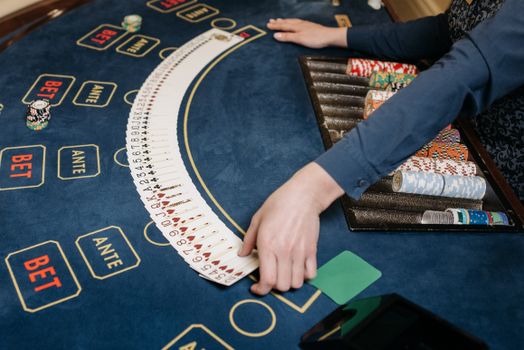
A casino dealer handling cards at a gaming table, ready for blackjack or poker.Photo: Anna Shvets / Pexels
If you're serious about improving what are the odds in blackjack, mastering basic strategy is non-negotiable. Basic strategy is a mathematically derived set of rules that tells you the optimal decision for every possible hand combination you can have against every possible dealer upcard. It was developed through extensive computer simulations, analyzing millions of hands to determine the play that minimizes the house edge to its lowest possible point, typically around 0.5% to 1%. This isn't guesswork; it's a proven method that takes the emotion out of playing and replaces it with statistical certainty. Learning basic strategy involves memorizing a chart that dictates whether you should hit, stand, double down, split, or surrender based on your hand total and the dealer's visible card. For example, if you have a hard 16 (a hand without an Ace, or an Ace counted as 1) and the dealer shows a 10, basic strategy advises you to hit. However, if the dealer shows a 6, basic strategy advises you to stand. These decisions are not arbitrary; they are based on the probabilities of the dealer busting or making a strong hand, and your own chances of improving your hand without busting. Adhering to basic strategy consistently ensures you are always making the play with the highest expected value. The impact of basic strategy on what are the odds in blackjack cannot be overstated. Players who deviate from basic strategy, even with seemingly intuitive plays, give back a significant portion of their potential advantage to the casino. For instance, hitting on a hard 17 against a dealer's 6 might feel aggressive, but it's a statistically poor move that increases the house edge. Conversely, always hitting on a 12 against a dealer's 2, 3, 7, 8, 9, 10, or Ace is the correct play, even though it feels risky. The key is to trust the math, not your gut. There are numerous resources available to learn basic strategy, from printable charts to online interactive trainers. Many casinos even allow players to use basic strategy charts at the table, encouraging responsible play. While basic strategy doesn't guarantee you'll win every hand, it ensures that over the long run, you're playing with the best possible odds against the casino. It's the essential first step for anyone looking to play blackjack seriously and increase their chances of consistent success. Without it, you're essentially playing a much higher house edge game.

Advanced Techniques: Card Counting and Rule Variations

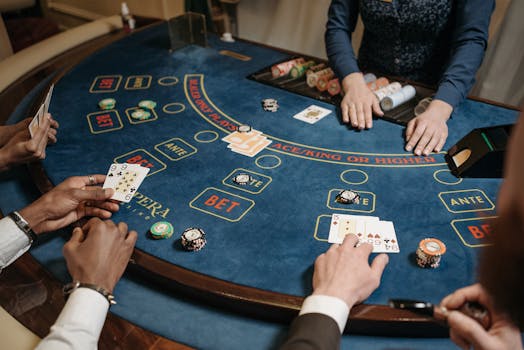
An intense poker game featuring players and poker chips on the table in an indoor setting.Photo: Javon Swaby / Pexels
Beyond basic strategy, more advanced techniques exist for those looking to further tilt what are the odds in blackjack in their favor. The most famous, and often misunderstood, of these is card counting. Card counting isn't about memorizing every card dealt; rather, it's a system to keep track of the ratio of high-value cards (10s and Aces) to low-value cards (2s through 6s) remaining in the shoe. When the deck is 'rich' in high cards, the player's advantage increases, as there's a higher probability of getting a blackjack, the dealer busting, or getting a good card when doubling down or splitting. Conversely, a 'poor' deck (rich in low cards) favors the house. The most common card counting system is the Hi-Lo count, where 2s-6s are assigned a +1 value, 7s-9s are 0, and 10s-Aces are -1. As cards are dealt, the counter adds or subtracts these values, keeping a running count. This running count is then converted into a 'true count' by dividing it by the estimated number of decks remaining. A positive true count indicates a player advantage, prompting larger bets and deviations from basic strategy (e.g., taking insurance, standing on certain totals where basic strategy would dictate hitting). While not illegal, casinos frown upon card counting and can ask players to leave if suspected. It requires significant practice, concentration, and bankroll management. Another crucial aspect affecting blackjack odds are the specific rules of the game being played. These rule variations can subtly, but significantly, alter the house edge. For example, a game paying 3:2 for a natural blackjack is more favorable than one paying 6:5, adding approximately 1.39% to the house edge. Other critical rules include: * **Dealer hits or stands on soft 17:** If the dealer stands on soft 17 (A-6), it's better for the player, reducing the house edge by about 0.22%. If the dealer hits on soft 17, it slightly increases the house edge. * **Number of decks:** Fewer decks generally mean a lower house edge, as it makes card counting slightly more effective and probabilities less diluted. Single deck blackjack typically has the lowest house edge, assuming favorable rules. * **Doubling down rules:** The ability to double down on any two cards (including after splitting) is more advantageous than restrictions on doubling. * **Splitting rules:** Re-splitting pairs, especially Aces, and splitting different 10-value cards (e.g., a King and a Jack) can improve player odds. * **Surrender option:** Offering early or late surrender reduces the house edge by about 0.07% to 0.08%, allowing players to fold a bad hand for half their bet. Understanding these rule variations is paramount for any serious gambler looking to choose the most advantageous tables. Always scrutinize the table rules before sitting down to play, as they directly impact your long-term profitability.

Common Mistakes and How to Avoid Them to Improve Your Odds
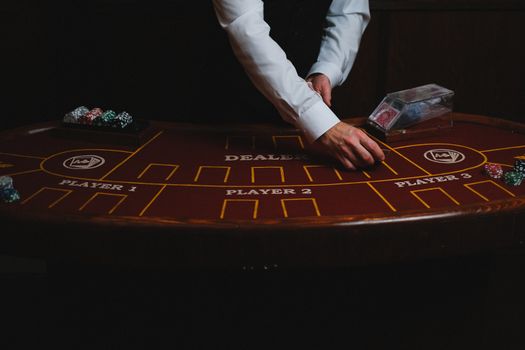
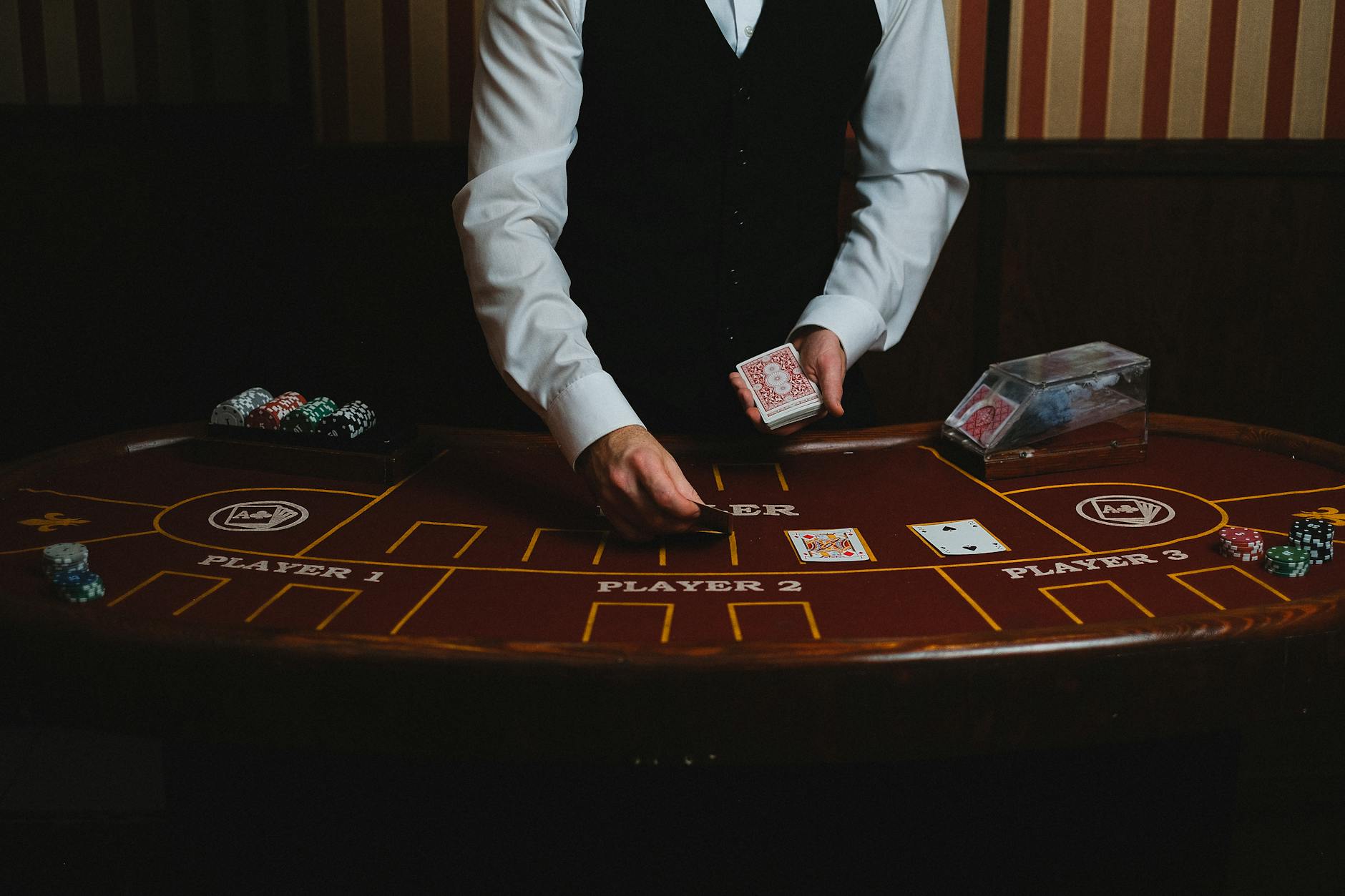
People playing a lively card game at a casino table with chips and a dealer.Photo: Pavel Danilyuk / Pexels
Even with a basic understanding of what are the odds in blackjack, many players fall prey to common mistakes that unnecessarily increase the house edge. Avoiding these pitfalls is as crucial as learning basic strategy. One of the most prevalent errors is ignoring basic strategy altogether. Players often rely on intuition, hunches, or superstitious beliefs, leading to suboptimal decisions like hitting on a hard 18 against a dealer's 6 (when you should stand) or standing on a hard 12 against a dealer's 10 (when you should hit). Each deviation from basic strategy, even if it feels right in the moment, chips away at your long-term winning potential. The remedy is simple: commit basic strategy to memory and stick to it religiously. Another frequent mistake is chasing losses or increasing bets irrationally. This is a classic gambler's fallacy, believing that past outcomes influence future ones. Blackjack probabilities are independent for each hand, assuming the deck is shuffled. Doubling your bet after a loss hoping to win it back quickly can lead to rapid bankroll depletion. Conversely, increasing bets because you're on a 'winning streak' is equally flawed; the odds haven't fundamentally changed (unless you're card counting, which is a different scenario). Smart players manage their bankroll, betting consistently within their means, and never betting more than they can afford to lose. * **Ignoring Table Rules:** Not checking the specific rules of the table, especially blackjack payouts (3:2 vs. 6:5) and dealer actions on soft 17, is a costly oversight. Always seek out tables with the most player-friendly rules to minimize the house edge. * **Taking Insurance:** Insurance is almost always a bad bet for the player, despite how tempting it might seem. It's a side bet that the dealer has a blackjack when their upcard is an Ace. The true odds of the dealer having a blackjack are less favorable than the 2:1 payout, making it a negative expectation bet, except for advanced card counters with a very high true count. * **Playing Emotionally:** Emotions like frustration, excitement, or boredom can cloud judgment. Blackjack requires a clear, logical mind. If you find yourself getting emotional, it's often best to take a break. * **Mismanaging Bankroll:** Betting too much too soon, or not setting limits, is a recipe for disaster. A proper bankroll strategy ensures you can withstand losing streaks and capitalize on winning ones without going broke. By consciously avoiding these common mistakes, players can significantly improve their overall performance and make the odds in blackjack work more in their favor. It's about disciplined play, adherence to proven strategy, and a rational approach to the game.

Comparison

FeatureOptimal Blackjack PlayCasual Player (No Strategy)Card Counter
House Edge0.5% - 1%2% - 5%+Player Edge (0.5% - 2%)
Decision MakingBasic Strategy ChartIntuition/HunchesBasic Strategy + True Count
Risk LevelLow (Controlled)High (Unpredictable)Moderate (Requires Skill)
Knowledge RequiredBasic StrategyGame Rules OnlyBasic Strategy + Card Counting
Long-Term ProfitabilityPossible (Small Gains)Unlikely (Consistent Losses)Likely (Significant Gains)

What Our Readers Say

5 ★★★★★

"This article completely changed my perspective on what are the odds in blackjack. I used to play by feel, but after reading this, I'm committed to basic strategy. My sessions are much more consistent now!"

5 ★★★★★

"The breakdown of rule variations was incredibly helpful. I now know exactly what to look for at a table to get the best possible odds. It's made a noticeable difference in my enjoyment and wallet."

5 ★★★★★

"I always thought card counting was just for movies, but this explanation of how it affects the odds in blackjack made it much clearer. I'm starting to practice the Hi-Lo system now, and it's fascinating."

4 ★★★★☆

"While I still struggle with memorizing the entire basic strategy chart, the advice on avoiding common mistakes was a game-changer. I've stopped taking insurance and my bankroll is lasting much longer."

5 ★★★★★

"As someone new to casino games, I was intimidated by blackjack. This guide on what are the odds in blackjack broke down complex concepts into easy-to-understand sections. I feel much more confident sitting at a table now."

Frequently Asked Questions

What is the absolute best house edge I can expect in blackjack?
With optimal basic strategy and favorable rules (e.g., 3:2 payout, dealer stands on soft 17, fewer decks), the house edge can be as low as 0.2% to 0.5%. This is why selecting the right table is crucial for minimizing the odds against you.
Does playing multiple hands at once improve my odds in blackjack?
Playing multiple hands does not inherently improve your odds per hand. Each hand is an independent event with its own probabilities. It simply increases the speed at which you play and potentially the variance of your results, but not the underlying house edge.
How long does it take to learn basic strategy for blackjack?
Most players can learn the core basic strategy in a few hours of dedicated practice using charts or online trainers. Achieving mastery and being able to apply it quickly and accurately at a live table takes more consistent practice, often several weeks or months.
Is it worth it to play blackjack games that pay 6:5 for a natural blackjack?
Generally, no. A 6:5 payout for blackjack significantly increases the house edge by approximately 1.39% compared to the standard 3:2 payout. Always seek out tables that offer 3:2 for a natural blackjack to maintain the best possible odds.
How do different rule variations impact what are the odds in blackjack?
Rule variations can significantly alter the house edge. For example, a dealer hitting on soft 17 adds about 0.22% to the house edge, while allowing re-splitting aces can reduce it. Always review the specific table rules before playing to ensure you're at the most favorable game.
Who should focus on understanding blackjack odds?
Anyone who plays blackjack, from casual players to aspiring professionals, should focus on understanding the odds. A basic understanding helps recreational players make better decisions, while a deep dive is essential for those looking to play strategically and minimize losses or even gain an edge.
Is card counting illegal, and what are the risks?
Card counting is not illegal in the US; it's a skill-based technique. However, casinos consider it undesirable and reserve the right to refuse service to suspected card counters. Risks include being asked to leave, being barred from casinos, or having your play restricted, but not legal prosecution.
What is the future trend for blackjack odds in casinos?
The trend in some casinos has been towards less favorable rules, such as 6:5 blackjack payouts and more decks. However, player demand for fair games and competition among casinos means favorable rules can still be found. It's crucial for players to stay informed and seek out tables with the best odds.

Armed with a deeper understanding of what are the odds in blackjack and how to influence them, you're now ready to approach the game with confidence and a strategic mindset. Apply these insights, practice diligently, and transform your blackjack experience from mere chance to calculated advantage.

Topics: what are the odds in blackjackblackjack house edgeblackjack probabilityblackjack strategycard counting blackjack